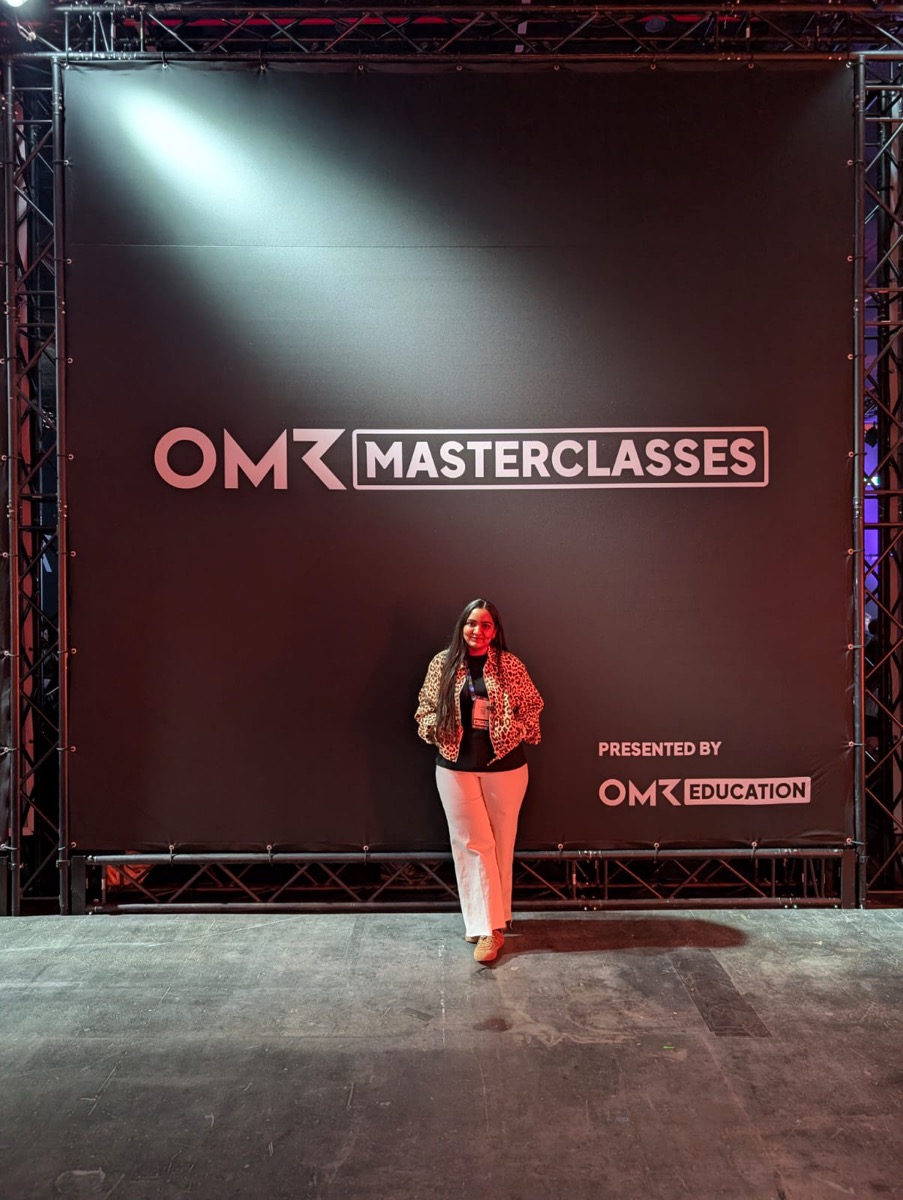
By: Kirti Raghu
Hamburg, May 5 and 6. I went with my friend and colleague, Lucia Bottlikova, and the two of us basically talked for forty-eight hours straight. Between sessions we walked the halls, swapped notes, argued about which booths were actually selling something and which ones just had good lighting. Most of the week ran on conference coffee. It was a good two days.
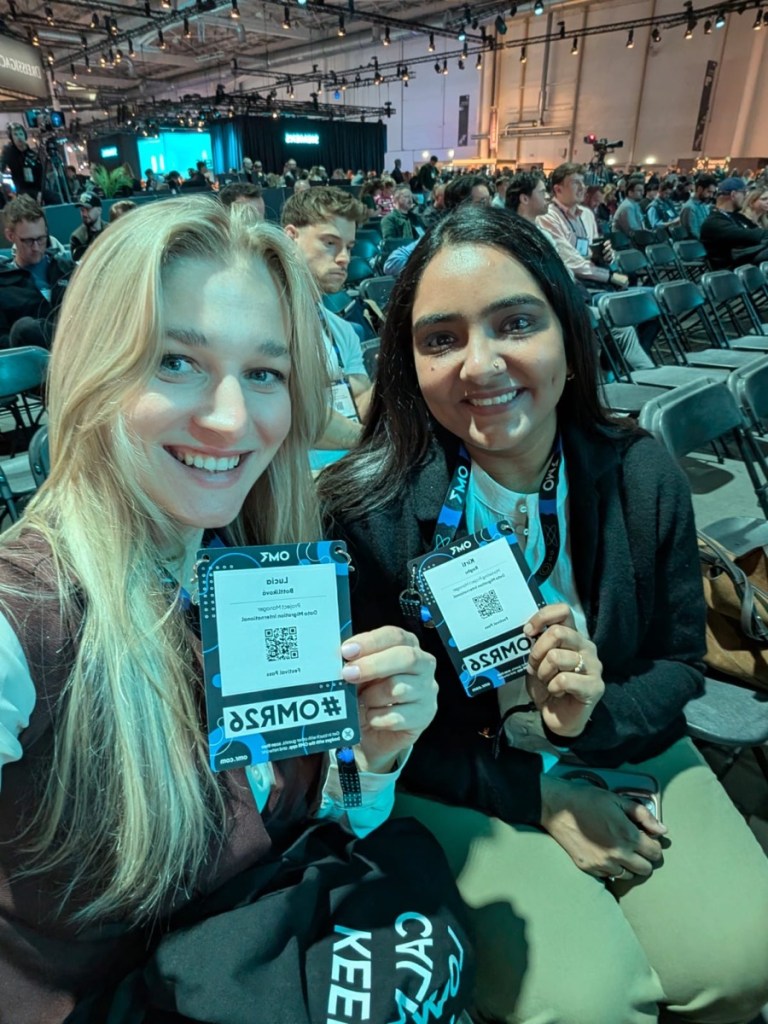
OMR is one of the few events where the platforms, the agencies, and the in-house teams all turn up at the same time. So you get to watch how each side is really handling the AI shift, not the polished version everyone posts about afterward. That’s mostly why I wanted to go. Read the room, listen for the signals worth bringing home, pressure-test what we’ve been telling ourselves about where marketing is heading.
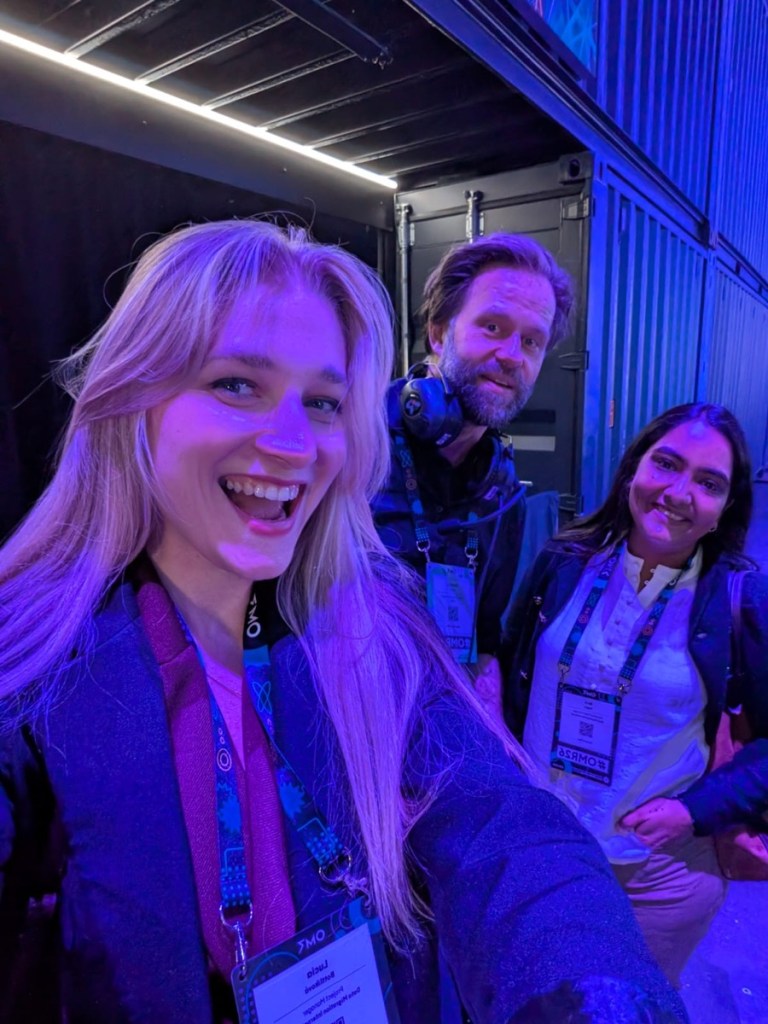
One moment I’ll keep: partway through, Lucia and I ran into Christian Cohrs, who edits and shapes content for the OMR podcasts. We got to hand over the chocolates from Kevin Kugel. Thanks to Tom and Jana for making that happen. The kind of short hallway conversation that’s usually worth more than the panel you skipped to have it.
Most of what I’m taking back came out of five masterclasses. Here’s the short version of each, with what I think it means for the way we actually work.
The masterclasses
- Canva, on what AI can’t replace. Claire Darley opened with screenshots of comments under AI-generated posts. Hollow, repetitive, the beige content we’ve all watched flood our feeds. Her point wasn’t to use AI less. It was to use it more deliberately. The gut check their teams run before publishing: would a real person actually stop scrolling for this? If not, the speed didn’t buy you anything. The thing I wrote down for us was simpler. Don’t let AI slop creep into our own output when a deadline is tight. The judgment about whether something is worth shipping is still ours, and it’s the part that’s easy to skip when you’re moving fast.
- Salesforce, on GEO and the new marketing org. Martin Kihn walked through the projection where traditional SEO declines and GEO, Generative Engine Optimization, climbs through the end of the decade. If a brand isn’t showing up in AI-generated answers for its own category, it’s quietly going invisible in a growing share of how people find anything. He also reframed the org itself. Less channel-first, more audience-first. Agents pick the touchpoint, we define what the brand sounds like. I came out of this one thinking we should be running a basic GEO check on every client, so the conversation starts with their real AI-search visibility instead of a generic SEO opener.
- SAP, on what SaaS is becoming. Best session of the week for me, the one I’d tell people to listen back to. One slide: if an AI agent can rebuild your product’s core workflow in a weekend, what is the customer actually paying for every month? Their answer was context. Process knowledge, governance, memory that persists. The model isn’t the defensible part. Everything around it is. It also shifted how I think about software in general. The skill that matters is moving away from knowing a platform inside out and toward knowing the outcome you’re after and trusting the system to find the path. It made me think the way we talk about our own AI work needs to change too. Lead with the context we bring, not the fact that we use AI.
- OpenAI, on the agentic stack. Nick Turley showed how Codex has grown past “tool that writes code” into something that sits across your whole stack. The line I keep repeating: a chatbot answers your question, an agent owns the task end to end. That distinction sounds small until you start picturing what it does to a workflow, things like writing, reporting, reviewing, organizing. The part I noted for us was the permission settings. Default, auto-review, full access. That’s the question we’ll be answering internally before long. How much do you let an agent do on its own, what gets a human review, what never goes out without someone looking.
- OTTO and Insider One, on multi-agent engagement in practice. The clearest architecture diagram of the whole event, and a real example of it running. Decision engines making the call at the moment of contact instead of leaning on segments somebody built three weeks ago. The message, the timing, the channel, all chosen on live signals. What I took from it is that the technology can organize and deliver the communication, but the strategy behind it still needs a person. The practical version for us: pick one client journey and re-map it from campaign-led to orchestration-led, even just on paper, to see where the system would make the calls and where we still need to.
What the floor actually rewarded
At an event packed with enterprise AI, the things people stopped for were the mascots. Foam suits. Master Chief standing at the Microsoft booth. I also walked away with an AI-generated tote from the KPMG booth featuring Onyx, the golden retriever. It’s a good reminder that even in a room obsessed with tools and data, what people remember is the thing that felt human or useful or a little bit fun.
The best version of that I saw was LYFEADS. They put free period products across the venue, paid for by brand placements in the restrooms rather than by the person who needs them. Practical, not promotional. The brand gets attention in a spot where you actually have a minute, and someone gets something they need. That’s the kind of sponsorship I’d happily pitch to a client when the cause and the brand honestly overlap.
One conversation that stuck
I got talking with Anne Schwarz, who runs global internal comms at DHL Express. Her team already uses AI to translate at scale. She can push a CEO update into forty languages overnight. What it can’t do is read the room in each market. Tone, the local quirks, the cultural register, that still needs a person who lives in that context. It put words to something I’d been circling all week. There’s a difference between translating words and actually communicating with people, and that gap is where the human work still lives.
So that’s the trip. AI moves the work faster, but it doesn’t decide what the work is for. Most of the sessions, in their own way, landed in the same place. The next bit is figuring out how to put it into practice, in how we plan, how we staff, and how we pitch. The slides are interesting. What you do with them when you’re back at your desk on a Monday is the actual test.
A thank you, and why this matters
None of this happens without Nytro, and without Tom Pfister, who made the trip possible. I’m genuinely grateful for it. This was my experience to have, but the bigger point isn’t really about me. Marketers should be in rooms like OMR. Events like this are how you see what’s actually shifting, what’s changing under your feet, what’s quietly being replaced, and where the next bet for marketing and communications is headed. You don’t get that from a recap thread or a summary deck. You get it from standing in the room, watching what people respond to, and noticing the gap between what gets announced on stage and what’s really being built.
And the learning curve, when you get an opportunity like this, is steep in the best way. You come back with more questions than you left with, and a sharper sense of what to pay attention to next. I’m glad Nytro sees the value in putting that kind of investment into its people. It’s not a given. Plenty of companies treat conferences as a perk or a line item. The ones that treat them as how a team stays current, that’s a different thing, and it shows up in the work later. So thank you for that.
I also built the full visual version, with the photos from the floor, the masterclass slides, and the moments in between. See the whole experience here: https://nytroatomr2026.netlify.app
There’s more here than fits on a page. If any of it is useful to you, I’m happy to talk it through.
Kirti Raghu, OMR Hamburg, May 5 to 6, 2026. Walked the floor with Lucia Bottlikova.


Leave a Reply