Published by: tmalgireddy
By: Tom Pfister
Gen Z has grown up surrounded by content. They have seen every trend, every brand voice, every “relatable” post, and every campaign that was clearly trying a little too hard. Because of that, they can usually tell when a brand is being genuine and when it is just chasing attention.
That is something I have talked about with Tyesha, who is part of Gen Z herself. From her perspective, the issue is not that brands should avoid trends or stop trying to connect with younger audiences. The issue is that Gen Z can tell when the connection does not feel real.
As Tyesha put it, Gen Z does not want brands to sound like they are pretending to be their best friend. They want brands to understand what they care about, communicate clearly, and show up in a way that actually makes sense.
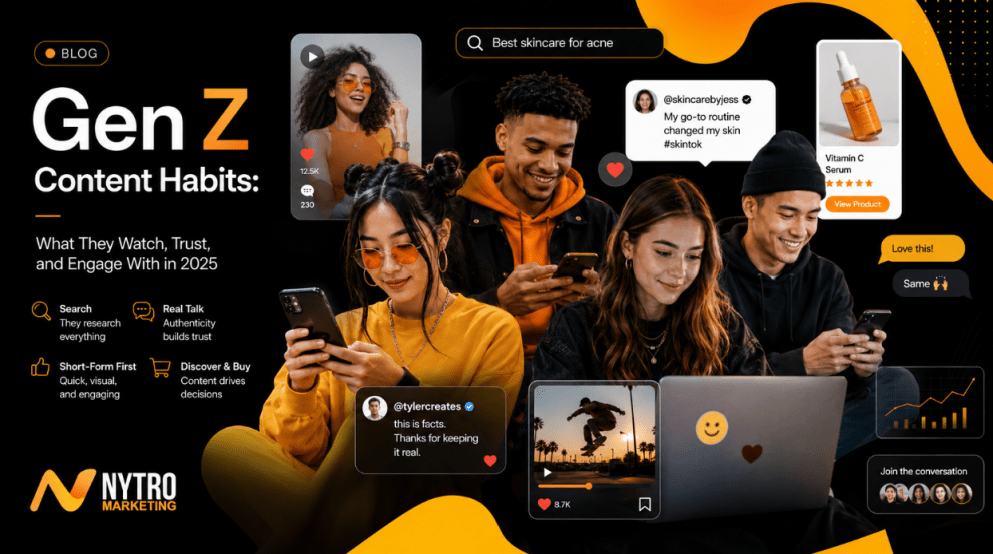
One major shift is that Gen Z uses social media for much more than entertainment. Platforms like TikTok, Instagram, and YouTube are not just places to scroll anymore. They are also places to search, learn, compare products, follow creators, discover brands, and decide what feels worth trusting.
That means content has to do more than look good. A funny post may get attention, but useful content is what often builds trust. Gen Z wants quick explanations, honest product information, real examples, and content that feels like it was made with the audience in mind.
Tyesha also pointed out something important: Gen Z does not expect every brand to be funny, casual, or trendy. In fact, when a brand forces slang or jumps on a trend that does not fit, it can have the opposite effect. Instead of seeming relatable, it can seem disconnected.
This is where brand identity matters. A brand’s tone should match who the brand actually is. If a company is more professional, educational, or technical, that is completely fine. The goal is not to sound like Gen Z. The goal is to communicate with them in a way that feels natural, respectful, and relevant.
Short-form video is still a major part of how Gen Z consumes content, but format alone is not enough. A brand cannot rely on the fact that something is short, fast, or visually engaging. The message still has to matter.
Gen Z audiences often respond to content that gives them something useful: a behind-the-scenes look, a simple explanation, a real customer story, a transparent answer, or proof that a brand understands the problem it is trying to solve.
The biggest mistake brands make is treating Gen Z like one simple audience. Gen Z is not one personality type, one trend cycle, or one style of communication. Different groups care about different things, and they can tell when brands are making assumptions instead of actually listening.
For brands, the lesson is simple: do not just chase what is popular. Pay attention to what is useful. Do not force relatability. Build trust through clarity, consistency, and real value.
Gen Z does not need brands to be perfect. They need brands to be honest, self-aware, and intentional about why they are showing up in the conversation.
The biggest takeaway from my conversation with Tyesha is that brands and Gen Z are not always as far apart as they may think. Both care about connection, trust, and relevance. Brands want to create content that gets noticed, and Gen Z wants content that feels worth paying attention to.
The difference is in how that trust is earned. Brands often look at content through the lens of strategy, trends, platforms, and performance. Gen Z looks at it through experience. They notice when something feels forced, when a trend feels late, or when a brand is speaking in a way that does not match who they really are.
That does not mean brands need to completely change who they are to reach Gen Z. In fact, the opposite is true. The most effective brands are the ones that understand their audience without pretending to be their audience. They know when to be helpful, when to be entertaining, and when to simply be clear.
For me, the lesson is that Gen Z content is not about sounding younger. It is about listening better. The brands that will stand out are not the ones chasing every trend, but the ones that can find the overlap between what they want to say and what their audience actually cares about.
Sources:
HubSpot, “Social Media Trends Report”
https://offers.hubspot.com/social-media-trends-report
Sprout Social, “The State of Social Media 2026”
https://sproutsocial.com/insights/the-state-of-social-media/
Sprout Social, “Gen Z Social Media Trends & Usage”
https://sproutsocial.com/insights/gen-z-social-media/
 Amazing Experiences
Leave a comment